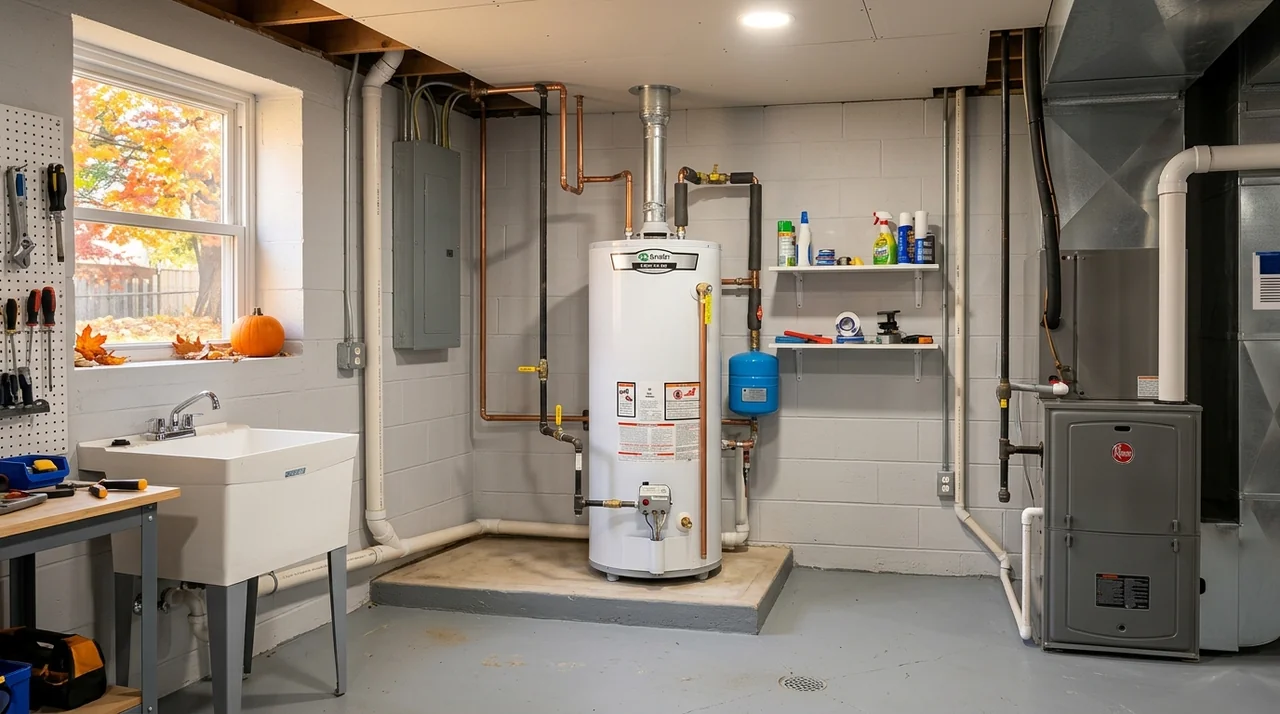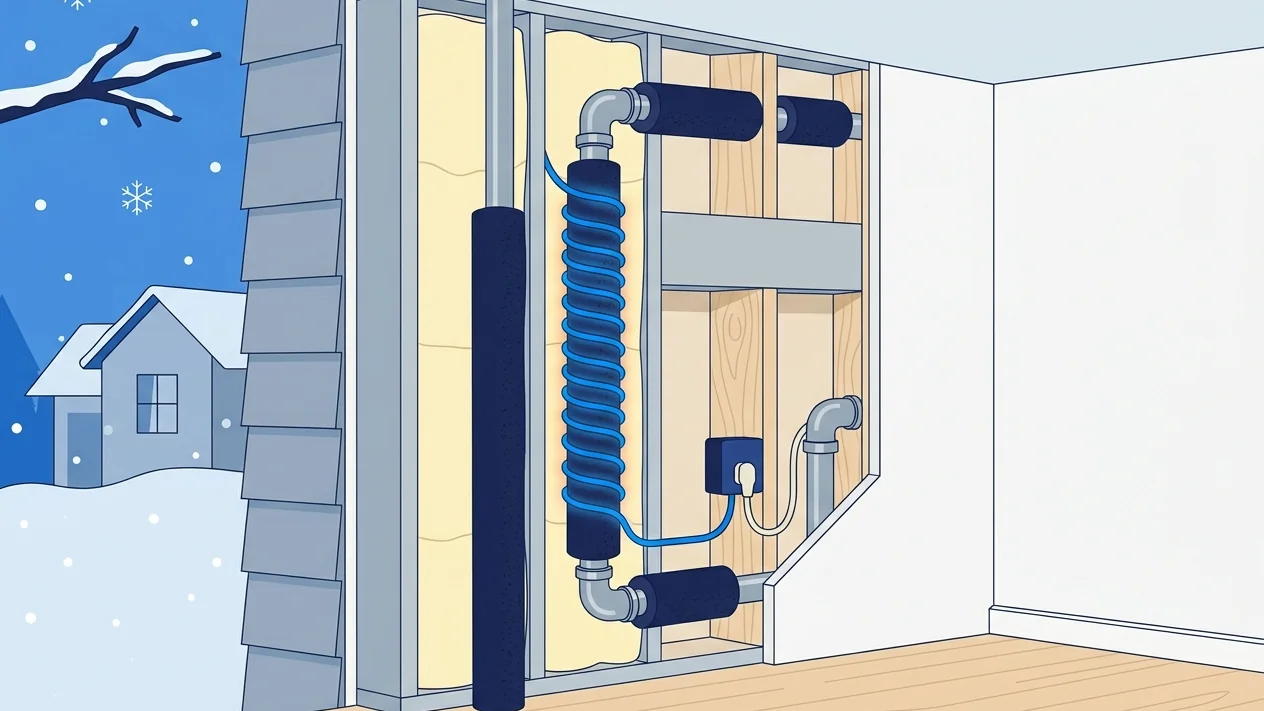
From strange rumbling sounds to a cold Sunday morning shower — here’s what every Rahway, Union County and Essex County homeowner should know before repairing or replacing a water heater. Written by the licensed master plumbers at Freedom Plumbing.
Published: July 31, 2026 · Author: Freedom Plumbing Team · Read time: 8 min
TL;DR — Quick Answers
- Most NJ tank water heaters last 8–12 years; tankless units last 20+ years.
- Repair if the unit is under 8 years old and the issue is a thermostat, element, or valve.
- Replace if you see rust in the hot water, water on the floor, or loud rumbling.
- Expect $1,600–$2,800 for tank installs and $3,500–$6,000 for tankless in North Jersey.
- NJ requires a plumbing permit — a licensed master plumber must pull it.
Water heaters are one of those appliances you don’t think about — until you don’t have hot water. And in North Jersey, where winter mornings can drop into the teens, that first shock of a cold shower is a problem you’ll want fixed today. This guide walks you through everything a homeowner in Rahway, Union County or Essex County needs to know: recognizing warning signs, deciding between repair and replacement, choosing tank vs. tankless, understanding NJ permit requirements, and knowing what a fair install actually costs.
Warning signs your water heater is failing
Water heaters rarely die overnight. Most give you weeks — sometimes months — of warning. Catching these signs early can save you from a flooded basement, expensive water damage, and paying emergency rates for a same-day replacement.
- Rusty or discolored hot water. If cold water runs clear but hot water is brown or metallic-tasting, the inside of the tank is rusting from the anode rod out.
- Popping, rumbling, or banging sounds. That's sediment (mostly calcium and magnesium from NJ's hard water) heating up and superheating trapped pockets. It kills efficiency and cracks the tank.
- Water pooling around the base. Small drips from fittings are fixable. A puddle around the tank itself usually means the inner steel liner has cracked — it's replacement time.
- Not enough hot water. If your family used to get four back-to-back showers and now only manages two, sediment is displacing usable capacity, or the dip tube is broken.
- The pilot light won't stay lit. Could be a $40 thermocouple. Could also be a failing gas control valve — a job for a licensed plumber.
- Age. If you don't know how old it is, check the serial number sticker. Over 10 years and any of the symptoms above? Replace.
Repair or replace? A decision framework
The rule of thumb we give our Union County customers: if the repair costs more than 50% of a new unit and the heater is over 8 years old, replace it. Anything else, repair is usually the smarter call. Here’s how the most common issues shake out:
| Issue | Typical Fix | Repair or Replace? |
|---|---|---|
| Pilot light out | Thermocouple / igniter | Repair |
| No hot water (electric) | Heating element or thermostat | Repair |
| Lukewarm water only | Dip tube or lower element | Repair |
| Rumbling / popping | Flush; if 8+ yrs, plan replacement | Depends on age |
| Rusty hot water | Corroded tank | Replace |
| Leaking tank body | Cracked inner liner | Replace immediately |
| Over 12 years old | End of service life | Replace proactively |
Pro tip from our master plumbers: A leaking tank is a ticking clock. Once the inner steel vessel starts weeping, it can rupture in days. If you see any pooling water and the source is the tank itself (not fittings), turn off the gas or breaker, close the cold water inlet, and call us immediately at (732) 853-4115.
Tank vs. tankless water heaters in North Jersey
Every homeowner we visit asks the same thing: should I switch to tankless? The honest answer is “usually, but not always.” Here’s the head-to-head:
| Factor | Tank (40–50 gal) | Tankless |
|---|---|---|
| Upfront cost (installed) | $1,600 – $2,800 | $3,500 – $6,000 |
| Lifespan | 8 – 12 years | 20+ years |
| Energy savings vs. old tank | ~5–10% | 24–34% (per U.S. DOE) |
| Hot water supply | Runs out after ~2–3 showers | Endless, but flow-rate limited |
| Space required | Full closet / basement corner | Wall-mounted, shoebox-sized |
| Best for | Small families, tight budget | Larger homes, long-term owners |
When we recommend tankless
- You plan to stay in the home 7+ years (the payback window).
- Your household has 3+ people running simultaneous hot water (dishwasher + shower + laundry).
- You want to reclaim basement or utility-closet space.
- Your existing gas line and venting can handle the retrofit — something we assess on-site.
When we recommend sticking with a tank
- You're on a tight budget and just need reliable hot water for the next decade.
- Your home has electric-only service and gas conversion isn't practical.
- You're preparing to sell within 3 years.
Sizing your water heater correctly
The single biggest install mistake we see in older Rahway and Linden homes is a tank that’s too small — sized for the family that lived there in 1998. Use this quick guide:
- 1–2 people: 30–40 gallon tank, or a 5–7 GPM tankless
- 3–4 people: 40–50 gallon tank, or a 7–9 GPM tankless
- 5+ people: 50–75 gallon tank, or a 9–11 GPM tankless
For tankless, GPM (gallons per minute) matters more than tank capacity. North Jersey groundwater in January averages 45°F, meaning a tankless has to heat water by 75° to deliver a hot shower — that knocks a unit’s rated GPM down by roughly 30%. Sizing tankless correctly is where most DIY-friendly big-box installations go wrong.
NJ water heater permits, code, and inspections
This is where hiring a licensed NJ master plumber pays for itself. New Jersey requires a plumbing permit for every water heater replacement, and depending on the municipality, you may also need a mechanical, gas, or electrical sub-permit. A few things to know:
- Permits typically cost $75–$200 depending on your township.
- NJ code requires a seismic strap, drip pan with drain (if in an attic or over living space), and a properly-sized T&P relief valve discharge line.
- Gas units require sealed combustion venting through Category III/IV stainless if power-vented, or an approved B-vent chimney liner if atmospheric.
- Post-install, the local plumbing inspector must sign off — homeowners who "just swap it themselves" often can't sell their home years later because of an open or missing permit.
At Freedom Plumbing, permits, seismic strapping, and inspection scheduling are always included in our quote — no surprise line items.
Extending your water heater's life
Whether you’re keeping your current unit or protecting a brand-new install, a few habits will add years of service:
- Flush annually. Sediment is the #1 killer of NJ water heaters. Fifteen minutes each fall pays for itself many times over.
- Test the T&P valve yearly. Lift the lever; water should discharge and the lever should snap back.
- Check the anode rod every 3–4 years. This sacrificial rod rusts so your tank doesn't. Replacing it can double tank life.
- Set the thermostat to 120°F. Hotter than that wastes energy and increases scald risk. Cooler than 120°F risks bacterial growth.
- Install a water softener if you're in a hard-water pocket of Union County — Rahway, Cranford, and Westfield are all in the moderate-to-hard range.
Related reading: Considering a full plumbing tune-up? See our residential plumbing services and drain cleaning pages, or read our commercial plumbing guide for property managers and business owners.
Frequently asked questions
A traditional tank water heater in NJ typically lasts 8 to 12 years. Well-maintained tankless units routinely reach 20 years or more. Hard water shortens both — annual flushing is the single best thing you can do to extend life.
Rusty hot water, water pooling under the tank, popping/rumbling sounds, lukewarm output that won’t get hot, or a unit older than 10 years all point to replacement over repeat repairs.
For most North Jersey homes, yes. You get endless hot water, 24–34% energy savings (per U.S. DOE), and roughly double the lifespan of a tank. Upfront cost is higher, so it’s best when you plan to stay in the home 7+ years.
Standard 40–50 gallon tank installations in Union County typically run $1,600–$2,800, including labor, permits, and disposal of the old unit. Tankless installations run $3,500–$6,000 depending on gas line and venting requirements.
Yes. NJ requires a plumbing permit — and often a gas or electrical sub-permit — for every water heater replacement. A licensed NJ master plumber must pull the permit and coordinate the municipal inspection.
The usual culprits are a pilot light or igniter failure (gas), a tripped breaker or bad element (electric), a broken thermostat, or a sediment-clogged tank. If quickly re-lighting the pilot or resetting the breaker doesn’t restore hot water, it’s time to call a plumber.
Cold Shower Emergency? We're on the Way.
Freedom Plumbing offers 24/7 emergency water heater service across Union & Essex County. Licensed, insured, and rated 4.9★ across 287 Google reviews.