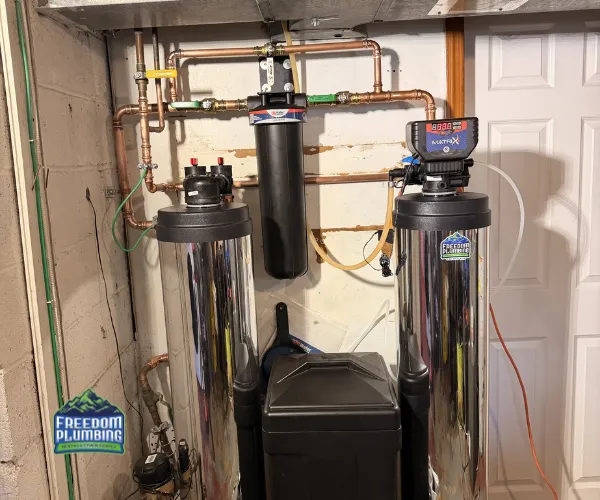
Salt-based water softeners use ion exchange to physically remove calcium and magnesium, effectively eliminating scale and providing a “slick” feel to the water. Salt-free conditioners use Template Assisted Crystallization (TAC) to neutralize minerals, preventing scale buildup without removing minerals or adding sodium. Softeners are superior for heavy scaling and appliance protection, while conditioners offer a lower-maintenance, salt-free alternative.
Understanding the Difference in Water Treatment Technology
When comparing solutions for mineral buildup, the choice narrows down to two distinct mechanical processes. While both systems aim to mitigate the effects of hard water, such as chalky residue on fixtures, they achieve these results through different chemical reactions. A plumber in Basking Ridge, NJ can help determine which technology aligns with your home’s specific pipe material and water usage.
How Salt-Based Water Softeners Work
The traditional salt-based system is an ion exchange unit. Inside the tank, resin beads are charged with sodium ions. As water passes through, the calcium and magnesium swap places with the sodium, physically stripping the minerals from your supply. This requires a periodic regeneration cycle to flush the captured minerals and recharge the resin from a brine tank.
How Salt-Free Water Conditioners Work
A salt-free conditioner does not “soften” the water because the minerals remain inside. It utilizes Template Assisted Crystallization (TAC) to alter the physical structure of the minerals, turning them into a hard crystal that cannot adhere to plumbing or heating elements. This is an ideal solution for those seeking a Basking Ridge plumber to install a system that requires zero wastewater or electricity.
Performance, Maintenance, and Impact
Choosing between these systems depends on your household’s volume and local environmental factors. During a recent plumbing audit for a client near the downtown Basking Ridge area, we observed that high-efficiency tankless units were failing prematurely due to untreated mineral scaling, proving that “standard” filtration isn’t always enough.
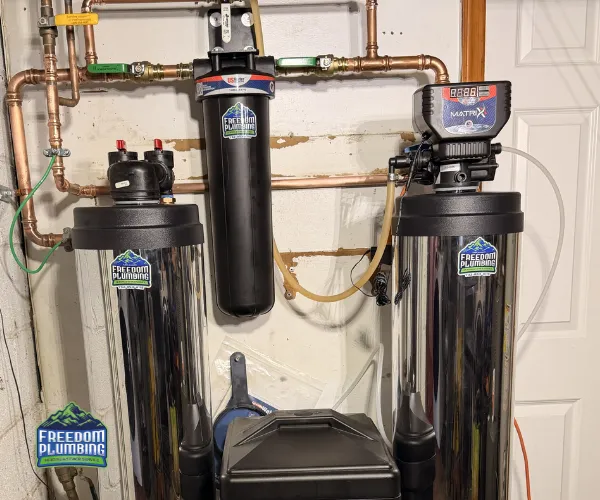
Comparison Table: Softeners vs. Conditioners
| Feature | Salt-Based Softener | Salt-Free Conditioner |
| Mineral Removal | Physically Removes Calcium/Magnesium | Neutralizes Minerals (Stays in Water) |
| Scale Prevention | 99% Effective | 90–95% Effective |
| Water Feel | “Slippery” or Slick Feel | Natural Feel |
| Maintenance | Monthly Salt Refills | Media Replacement (3–5 Years) |
| Wastewater | Produces Brine Discharge | Zero Waste |
| Electricity | Required for Regeneration | None Required |
5 Signs Your Home Needs a Salt-Based System
- Severe Limescale: Thick, white crust on showerheads and aerators.
- Soap Scum: Soap refuses to lather and leaves a film on surfaces.
- Appliance Failure: Frequent repairs for dishwashers or laundry units.
- Stiff Laundry: Fabrics feel scratchy or look dull after washing.
- High Grains per Gallon (GPG): A water test showing hardness levels above 10 GPG.
Debunking the “Maintenance-Free” Softener Myth
A common industry myth is that water treatment systems are “set it and forget it” appliances. Many providers claim their systems are maintenance-free to secure a quick sale, but this is a dangerous misconception. Every professional-grade unit requires a recurring service interval to prevent bacterial growth or media depletion, ensuring your home remains a safe Basking Ridge, NJ residence.
Applying the Freedom Plumbing Proprietary Methodology
Plumber in Basking Ridge, we resolve water quality issues using our Freedom Plumbing Proprietary Methodology. This is a high-transparency, “Stress-Free” framework designed to provide permanent infrastructure solutions through a refined three-step lifecycle.
- Advanced Diagnostics: We utilize color video camera inspections and hydro-jetting to assess the current state of your pipes. This allows us to identify root-cause failures rather than just treating symptoms.
- Engineered Solutions: We design a system tailored to your home’s footprint. By utilizing specialized techniques like trenchless repair logic and energy-efficient water heater installations, we ensure your project is engineered for long-term safety and code compliance.
- Maximum Property Value: Our three-step process focuses on high-quality workmanship and upfront pricing, ensuring your plumbing infrastructure becomes an asset rather than a liability.
While performing a routine check for a family in an established neighborhood, Basking Ridge, NJ,plumber used this methodology to identify that a salt-free system was the most cost-effective path for their specific water profile, saving them on annual maintenance while protecting their home.
People Also Ask (FAQ)
Does a salt-free conditioner remove lead or chlorine?
Standard conditioners focus on mineral scale. However, we can pair these with carbon filtration to remove chlorine, lead, and chemical contaminants.
Is softened water safe for drinking?
Yes, though salt-based softeners add a trace amount of sodium. If you are on a strictly low-sodium diet, a salt-free conditioner or a separate reverse osmosis system is the better path.
How long do these systems last?
A high-quality softener lasts 10–15 years with professional care. Salt-free conditioners have similar lifespans, though the internal TAC media usually requires replacement every 3 to 5 years.
Take Control of Your Home’s Water Quality
You shouldn’t have to worry about hidden fees or poor workmanship when protecting your property. At Freedom Plumbing, we provide concierge-level care focused on building long-term trust. As a veteran-supporting company, we value honesty, integrity, and transparency in every interaction.
Ready for a “stress-free” water solution? Contact a Basking Ridge plumber today to schedule your diagnostic water test. We offer 24/7 emergency assistance and upfront pricing to ensure you are never left waiting.