Before hiring a plumber in New Jersey, ask about licensing, the exact scope of work, how pricing is structured, what could change the price, whether permits or inspections apply, what warranty is offered, and how additional work will be approved.
You should also verify credentials instead of relying only on a company website or verbal claim. New Jersey regulates master plumbers through the State Board of Examiners of Master Plumbers, and the state provides a way for consumers to verify professional credentials.
Price matters, but it should not be the only factor. A low hourly rate tells you very little if you do not know what work is included, what materials will be used, how the problem was diagnosed, or what happens if the scope changes.
Are You Licensed to Perform Plumbing Work in New Jersey?
This should be one of the first questions you ask.
New Jersey regulates plumbing through the State Board of Examiners of Master Plumbers. Rather than simply asking, “Are you licensed?” ask for the license number and the name associated with it so you can independently verify the credential.
You can use the state’s official professional-verification resources to check licensing information.
Freedom Plumbing currently identifies owner Jacob Scillath as a New Jersey Licensed Master Plumber and publishes license #36BI01345200 on its About page.
That credential should still be independently verified at the time you are hiring any contractor.
What Exactly Is Included in the Proposed Work?
A good plumbing estimate should tell you what problem is being addressed and what work is actually being proposed.
Before approving the job, ask the plumber to explain:
- what they believe is causing the problem
- what they plan to repair, clean, install, or replace
- which materials or equipment are included
- what is not included
- whether cleanup or disposal is part of the scope
- whether restoration work will be needed afterward
- whether additional diagnostic work may be necessary
This is especially important for problems that may have more than one possible solution.
A leaking water heater, recurring sewer clog, or corroded section of piping may involve decisions beyond simply replacing one visible component.
Will I Receive the Scope and Price in Writing?
For larger jobs, this is more than a convenience.
New Jersey adopted a plumbing-contract rule requiring a written contract when consumer plumbing work costs $500 or more. The required contract includes details of the work, the price, and estimated start and completion dates. The rule also addresses situations where a job expected to cost less than $500 expands past that amount.
The written scope should make it easier for both you and the contractor to understand what was agreed to before substantial work begins.
Before signing, make sure you understand:
- the work being performed
- the stated price
- estimated scheduling
- anything specifically excluded
- payment expectations
- how additional work will be handled
The article is not a substitute for legal advice, but homeowners should understand that written documentation is an important part of substantial plumbing work in New Jersey.
Do You Charge Hourly, by the Job, or Another Way?
This is where many homeowners focus too much on a single number.
You may see searches such as:
- “What is the hourly rate for a plumber in NJ?”
- “How much an hour should a plumber charge?”
- “What do local plumbers charge?”
But an hourly rate alone does not tell you what a plumbing job will ultimately cost.
Different companies may structure pricing differently. One may quote a job price. Another may bill using time and materials. Diagnostic work, materials, access, permitting, emergency timing, and the actual problem can all affect what the customer pays.
What Is the Hourly Rate for a Plumber in New Jersey?
There is no single statewide hourly number that tells you whether a plumbing quote is fair.
A more useful question is:
“What exactly is included in this price, and under what circumstances could it change?”
That helps you compare real scopes rather than two numbers that may represent very different work.
What Could Cause the Price to Change?
Plumbing work sometimes reveals hidden conditions.
For example, a plumber may open access to a pipe and find more extensive corrosion than expected, or a sewer inspection may reveal structural damage beyond a simple blockage.
Before work starts, ask:
“If you find something additional, how will you explain it and get my approval before moving forward?”
That is a much better protection than assuming every job will match the first visual impression.
Potential reasons a scope may change can include:
- concealed damage
- unexpected pipe conditions
- additional materials
- expanded access requirements
- permit-related requirements
- customer-requested changes
The key is understanding how those changes will be communicated.
Why Are You Recommending Repair Instead of Replacement, or Replacement Instead of Repair?
This is one of the most useful questions you can ask.
A professional recommendation should be understandable in plain language.
If replacement is being recommended, ask:
- What failed?
- Is repair still technically possible?
- What would a repair accomplish?
- Why is replacement the better option?
- What are the risks of postponing the work?
- Are there reasonable alternatives?
This does not mean every plumbing problem has two equally valid solutions. Sometimes a component is no longer repairable or the repair would not address the underlying issue.
The goal is to understand why a particular recommendation was made.
Freedom Plumbing’s plumbing repair services page emphasizes diagnosing plumbing problems and avoiding unnecessary work. That positioning is useful, but the recommendation for any specific property still needs to be based on the actual condition found.
Will This Plumbing Job Require a Permit or Inspection?
Permit requirements depend on the type and scope of plumbing work.
Do not assume every repair requires a permit, and do not assume a major installation can proceed without one.
Ask:
- Does this particular job require a permit?
- Who is responsible for obtaining it?
- Is an inspection required?
- Is the permit cost included in the quoted price?
- Could permit requirements affect the schedule?
New Jersey plumbing work is regulated at the state and local level, so this is an area where the specific project matters.
For substantial installation or replacement work, asking this question before work begins can prevent confusion later.
What Insurance Coverage Does the Business Carry?
A legitimate contractor should be able to explain what insurance applies to the work.
For a larger project, you can ask whether proof of applicable insurance is available.
This is different from simply seeing “licensed and insured” on a website.
Freedom Plumbing’s About page currently says the company is fully licensed and insured.
However, specific policy limits or coverage details should never be assumed from that statement alone.
What Warranty Applies to the Work?
Do not stop at:
“Is there a warranty?”
Ask what the warranty actually covers.
Labor or Workmanship Coverage
Questions may include:
- What work is covered?
- How long does coverage last?
- What situations are excluded?
- Who should I contact if there is a problem?
Manufacturer Warranty
For installed equipment, also ask:
- Does the equipment have a manufacturer warranty?
- Does registration affect coverage?
- Who handles future manufacturer claims?
- Are labor costs included in manufacturer coverage?
Freedom Plumbing’s current About page states that the company guarantees labor, while its homepage refers to warranties on plumbing services.
Because those statements do not spell out exact terms, customers should still ask what applies to their specific job.
Who Will Actually Perform the Work?
A company may be properly licensed while having several employees or technicians working under its operation.
Instead of asking whether every person arriving at your home personally holds the same master-level license, ask:
- Who is responsible for the plumbing work?
- Who will perform the job?
- Who supervises the work?
- Will any portion be subcontracted?
This produces more useful information and avoids misunderstanding New Jersey’s licensing structure.
Freedom Plumbing currently identifies Jacob Scillath as its owner and licensed Master Plumber.
What Happens If You Find a Bigger Problem?
Plumbing problems are often hidden behind walls, underground, or inside pipes.
Imagine a drain that appears to need cleaning, but a camera later shows a damaged sewer line. Or a water-heater replacement exposes connections that also require attention.
Before approving the original job, ask:
“If you discover something that changes the scope, how will you show me what you found and explain the options?”
That question encourages communication before additional work is authorized.
It also helps distinguish between:
- the original problem
- an additional condition discovered during the work
- optional upgrades
- genuinely necessary added work
Is This Really an Emergency, or Can the Work Be Scheduled?
Not every plumbing problem requires immediate emergency service.
A slowly dripping faucet and an active sewage backup are very different situations.
Potentially urgent conditions can include:
- uncontrolled leaks
- burst pipes
- sewage backing into the property
- major flooding
- plumbing conditions that create an immediate safety or property-damage concern
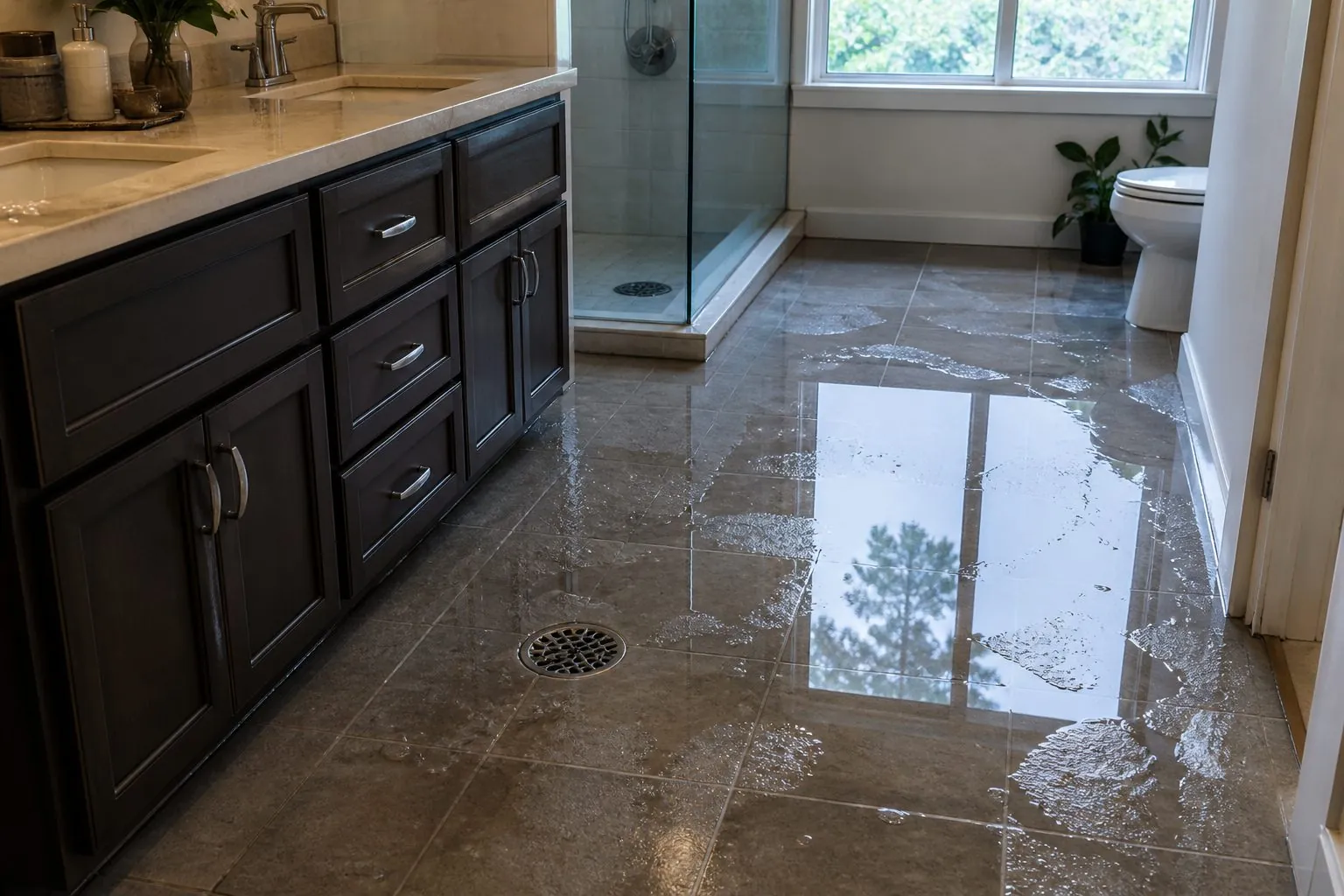
Freedom Plumbing’s existing emergency article discusses situations such as burst pipes, sewer backups, major water leaks, overflowing toilets, and multiple backed-up drains.
For additional guidance, see what to do during a plumbing emergency.
If the situation can safely wait, scheduling normal service may give you more time to understand the scope and compare options.
How Can You Tell If a Plumber Is Charging Fairly?
The best way to evaluate plumbing pricing is to compare the complete proposed solution, not just the hourly rate or bottom-line number.
When comparing estimates, look at:
- What problem each plumber says is causing the issue
- What work each quote actually includes
- Materials or equipment proposed
- Whether permits are included when applicable
- Warranty terms
- Potential additional charges
- Whether the proposed work solves the same problem
Two estimates can have very different prices because they describe very different jobs.
A higher quote does not automatically mean someone is overcharging.
Likewise, the cheapest quote is not automatically the best value if it excludes work another contractor considers necessary.
How Do You Know If a Plumber Is Good?
No one factor proves quality, but verifiable credentials, clear communication, a defined scope, understandable recommendations, and transparent documentation are much stronger indicators than marketing claims alone.
A homeowner should be able to get reasonable answers to questions such as:
- What is wrong?
- How did you determine that?
- What are you recommending?
- Why?
- What is included?
- What could change?
- What happens if there is a problem after the work?
Reviews can help provide context, but they should complement credential verification and a clear scope rather than replace them.
What Are Red Flags When Hiring a Plumber?
Some warning signs deserve extra attention:
- unwillingness to provide licensing information
- vague descriptions of expensive work
- pressure to approve major non-emergency work immediately
- refusal to provide required written documentation
- unclear payment expectations
- reluctance to explain why replacement is necessary
- telling you applicable permits or inspections should simply be ignored
New Jersey created its master-plumber contract requirements specifically as a consumer-protection measure, including written scope and pricing requirements for qualifying work.
Should You Always Hire the Cheapest Plumber?
No. You should compare price together with licensing, diagnosis, scope, materials, warranty, and the proposed solution.
The cheapest quote may be perfectly appropriate.
It may also exclude work contained in another proposal.
The only useful comparison is one in which you understand what each contractor is actually offering.
That is why detailed questions before hiring often matter more than trying to negotiate one line item after the fact.
Questions to Ask a New Jersey Plumber Before You Say Yes
Use this checklist before approving substantial plumbing work:
- What is your New Jersey plumbing license information?
- What do you believe is causing the problem?
- What work are you recommending?
- Why is that the recommended solution?
- Are there reasonable alternatives?
- What exactly is included in the price?
- What could cause the price to change?
- Will the scope and price be provided in writing when required?
- Does this work require a permit or inspection?
- Who handles the permit?
- What insurance applies to the work?
- What labor or manufacturer warranty applies?
- Who will actually perform or supervise the work?
- How will you handle additional problems discovered during the job?
- Is this truly an emergency or can it be scheduled?
If a plumber can clearly answer those questions, you are in a much better position to make an informed decision.
Frequently Asked Questions
Use New Jersey’s official professional-verification resources and check the license information provided by the plumbing company. Do not rely solely on a website badge or advertisement.
For consumer plumbing work costing $500 or more, New Jersey’s plumbing rule requires a written contract stating the work details, price, and estimated start and completion dates. The rule also covers situations where a smaller job expands to $500 or more.
There is no single hourly rate or percentage that proves overcharging. Compare the diagnosis, scope, materials, included work, warranty, and potential additional charges. If two quotes cover different work, comparing only the total price can be misleading.
For larger, non-emergency work, comparing proposals can help you understand whether contractors are recommending the same solution. Focus on comparing equivalent scopes rather than simply choosing the lowest number.
It is usually more useful to ask what the price includes, whether there are alternatives, and what could change the total. Understanding the scope gives you better information than negotiating without knowing what is actually included.
For significant work, it is reasonable to ask what insurance applies and whether documentation can be provided. Do not assume specific coverage limits simply because a company states that it is insured.
Looking for a Plumber in Rahway, NJ?
Freedom Plumbing is based in Rahway and provides both residential plumbing services and commercial plumbing services. Its current About page identifies owner Jacob Scillath as NJ Licensed Master Plumber #36BI01345200 and says the company serves Rahway and multiple surrounding New Jersey communities.
If you need plumbing service in Rahway or a surrounding service area, call (732) 853-4115 or request plumbing service to discuss the problem and next steps.