
When several drains back up, gurgle, or become slow at the same time, the restriction may be farther downstream in a shared drain or main sewer line rather than at one individual fixture. A single clogged sink can often be isolated to that sink’s drain. When the toilet, tub, floor drain, and other fixtures begin acting up together, the pattern points to a larger part of the drainage system.
Other warning signs can include a toilet gurgling when another fixture drains, water appearing in a tub or floor drain, sewage odors, and a problem that keeps returning after previous cleaning.
That does not automatically mean the sewer pipe is broken. The cause could still be a removable blockage. The goal is to find out where the restriction is and whether cleaning alone can solve it.
What Does It Mean When Several Drains Are Backing Up?
The drains in a home do not operate as completely separate systems.
Individual sinks, tubs, showers, toilets, and other fixtures connect into branch piping. Those branches eventually feed into larger drainage piping and the building sewer.
Because of those shared connections, a restriction farther downstream can affect several fixtures at once.
Freedom Plumbing’s own plumbing FAQ identifies repeated backups and slow drainage at multiple fixtures such as sinks, toilets, and tubs as warning signs of a problem involving the main sewage system.
This distinction is useful:
- One slow drain: more likely to involve that fixture or its nearby branch piping.
- Several drains affected together: more likely to involve shared drainage piping or the main sewer line.
“More likely” is important. Plumbing symptoms can overlap, so the pattern helps guide diagnosis but does not prove exactly where the blockage is located.
How Can You Tell a Main Sewer Problem From One Clogged Drain?
The number and location of affected fixtures provide some of the strongest clues.
Signs the Problem May Be Localized
A localized clog is more plausible when:
- only one sink, shower, or tub drains poorly
- fixtures elsewhere in the property work normally
- flushing a toilet does not affect another drain
- the problem remains limited to one part of the plumbing system
That may call for ordinary drain cleaning service rather than main-line sewer work.
Signs the Problem May Be Farther Downstream
A shared drain or sewer restriction becomes more likely when:
- several drains slow down together
- a toilet gurgles when another fixture is used
- water rises in the bathtub or shower
- a basement floor drain backs up
- several toilets or drains are affected
- sewage odors accompany slow drainage
- the same whole-house drainage problem keeps returning
Freedom Plumbing’s Sewer Cleaning page likewise identifies recurring clogs, slow drains, odors, and sewage backing into sinks, tubs, or toilets as possible signs of a main sewer-line blockage.
Why Does My Toilet Gurgle When Another Drain Is Used?
Gurgling can happen when air and wastewater are having difficulty moving normally through shared drainage piping.
If a restriction is farther downstream, water moving through one fixture may affect pressure and airflow elsewhere in the drainage system. That can produce bubbling or gurgling at a toilet or nearby drain.
Gurgling by itself does not prove that the main sewer is blocked. Plumbing-vent problems and other conditions can also create unusual sounds.
But gurgling combined with multiple slow or backed-up drains deserves more attention than an isolated noise.
Why Does Water Come Up in the Tub or Floor Drain?
Lower fixtures can become visible backup points when wastewater cannot continue downstream normally.
You might notice:
- water rising in a bathtub after a toilet is flushed
- a shower filling when another fixture drains
- wastewater appearing through a basement floor drain
- a lower-level toilet bubbling or overflowing
That does not necessarily mean the tub or floor drain itself is clogged.
The water may be showing up there because the obstruction is located after several fixtures have already joined the same drainage path.
A simple diagram showing the sink, toilet, tub, branch lines, and a downstream obstruction is especially helpful here because it lets homeowners see why fixtures that appear unrelated can react to the same clog.
What Can Cause Multiple Drains to Back Up?
Several different conditions can restrict a shared drain or sewer line.
Main Sewer-Line Blockage
Grease, waste, debris, and other material can accumulate or become lodged in a sewer line.
Freedom Plumbing’s current FAQ specifically identifies debris and grease buildup as common contributors to sewage backups.
When the obstruction is removable, professional sewer cleaning may restore normal flow without requiring sewer replacement.
Freedom Plumbing offers professional sewer cleaning for sewer backups and main-line blockage problems.
Heavy Buildup Inside the Pipe
Sometimes the problem is not one solid obstruction but material that has accumulated along the pipe.
Depending on the line and its condition, professional cleaning may involve mechanical equipment or hydro jetting.
Hydro jetting should not automatically be assumed to be the right choice for every blockage. Pipe condition and the material causing the restriction matter.
Root Intrusion
Roots can enter a sewer line through openings, damaged joints, or other defects and interfere with flow.
Removing the immediate root obstruction and determining why roots gained access to the line are two separate issues. If an underlying defect remains, cleaning alone may not address the cause of recurring intrusion.
Damaged or Displaced Sewer Pipe
Some recurring backups are associated with a structural problem rather than material that simply needs to be removed.
Possible visible conditions can include:
- cracks
- displaced pipe sections
- failed joints
- severe deterioration
- other structural restrictions
A sewer backup by itself does not prove that any of these conditions exist.
Should You Stop Using Water When Multiple Drains Are Backing Up?
If wastewater is actively backing up through multiple fixtures, reducing unnecessary water use is sensible because additional water sent down the drains can add to an already restricted system.
Avoid repeatedly flushing toilets, running showers, washing clothes, or using other fixtures simply to “test” whether the problem has gone away.
Freedom Plumbing’s existing emergency-plumbing guidance identifies backed-up drains affecting multiple fixtures and sewer backups as problems that can require urgent attention.
If wastewater is actively entering the home, also avoid unnecessary contact with it.
For broader immediate-response guidance, see Freedom Plumbing’s article on what to do during a plumbing emergency.
How Does a Plumber Find the Blockage?
The goal is to identify where the restriction is and what is causing it, rather than simply treating each slow fixture separately.
First, Identify Which Fixtures Are Affected
The pattern matters.
A plumber may consider:
- which drain showed symptoms first
- whether upper and lower floors are affected
- whether flushing a toilet changes another fixture
- whether the backup involves a basement floor drain
- whether the problem occurs constantly or only during heavy plumbing use
- whether it has happened before
That helps determine how far downstream the investigation should go.
Clear the Line When Appropriate
If an obstruction is preventing normal flow, professional cleaning may be needed.
The appropriate method can depend on the blockage and pipe condition. Mechanical drain or sewer equipment may make sense for one obstruction, while hydro jetting may be considered for heavier buildup.
The important point is that the cleaning method should follow the diagnosis rather than the homeowner guessing which machine is needed.
Use a Sewer Camera When It Can Answer the Next Question
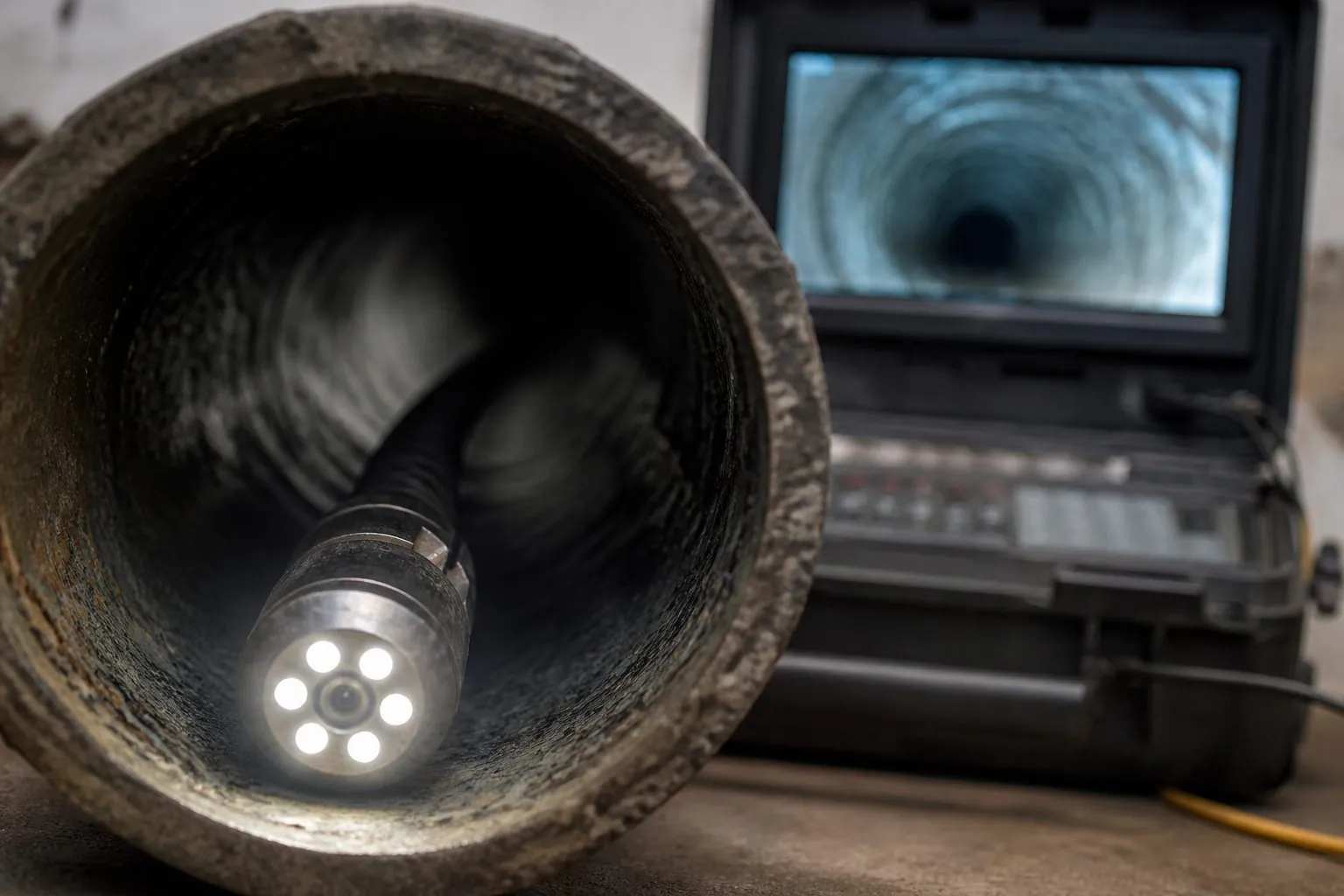
A sewer camera inspection can help evaluate visible conditions inside an accessible sewer line.
Freedom Plumbing’s sewer-repair information says sewer scopes may be used to locate blockages, cracks, and other line problems without unnecessary excavation.
A camera may help identify:
- remaining obstruction
- root intrusion
- cracks
- displaced sections
- other visible pipe conditions
However, camera inspection is not necessarily the first step in every completely blocked line. Sometimes enough flow or access must first be restored to obtain a useful view.
Can Drain Cleaning Fix Multiple Backed-Up Drains?
Yes, when a removable blockage in a shared drain or sewer line is causing the backup.
That is an important distinction because multiple backed-up fixtures do not automatically mean the sewer needs replacement.
If grease, debris, accumulated waste, or another removable obstruction is restricting the line, cleaning may restore flow.
But cleaning has limits.
Drain or sewer cleaning cannot repair a pipe that is structurally damaged.
That is why repeated blockages sometimes require another step after flow has been restored.
When Does a Sewer Line Need Repair Instead of Cleaning?
Repair becomes relevant when diagnosis identifies an underlying physical problem that cleaning cannot correct.
Examples can include:
- a cracked section of pipe
- a displaced or failed connection
- significant deterioration
- recurring root intrusion associated with a pipe defect
- another structural restriction
Freedom Plumbing offers sewer line repair or replacement as well as trenchless sewer services, but the appropriate repair method depends on what is actually found.
One sewer backup is not enough information to conclude that replacement is necessary.
Cleaning, inspection, and repair solve different problems.
Is More Than One Backed-Up Drain an Emergency?
It can be, particularly if sewage is actively entering the property, toilets cannot be used normally, or continued fixture use makes wastewater rise elsewhere.
Freedom Plumbing’s existing emergency guidance distinguishes an ordinary slow drain from a sewer backup pushing wastewater into the home.
More urgent warning signs include:
- sewage coming through a tub or floor drain
- overflowing lower-level fixtures
- multiple toilets becoming unusable
- continued wastewater backup whenever water is used
- conditions that threaten property or sanitation
Because the company’s website contains inconsistent emergency-hours wording across older pages, this article should not promise a particular arrival time or state specific after-hours availability.
What Should You Do if the Problem Keeps Coming Back?
A recurring multi-drain backup is a reason to stop treating each fixture as an unrelated clog.
A sensible diagnostic sequence is:
- Recognize the pattern. Multiple fixtures point toward shared piping.
- Determine where flow is restricted.
- Clear a removable obstruction when appropriate.
- Inspect further when recurrence or other evidence suggests an underlying problem.
- Repair the pipe only if diagnosis identifies damage that cleaning cannot correct.
Freedom Plumbing’s FAQ similarly notes that persistent problems after cleaning can indicate a pipe condition requiring further attention.
The goal is not to perform the most aggressive service first. It is to determine why the same drainage problem keeps returning.
Frequently Asked Questions
It can be a strong clue, but it is not absolute proof. When several fixtures are affected together, the restriction may be located in shared drainage piping or the main sewer line rather than at one fixture. The affected fixtures and other symptoms help narrow down the location.
Restricted drainage can interfere with the normal movement of wastewater and air through connected piping, which may cause bubbling or gurgling. If this happens together with slow drains or backups elsewhere, a shared downstream restriction becomes more concerning.
The toilet and tub may connect to the same drainage system farther downstream. If that shared line is restricted, water may move toward a lower fixture instead of continuing normally toward the sewer.
Hydro jetting may help when appropriate buildup in a shared drain or sewer line is causing the restriction, but it is not automatically the correct solution for every backup. The type of blockage and condition of the pipe should guide the cleaning method.
A camera can be useful when the problem keeps returning or when a plumber needs more information about visible conditions inside the line. It is not necessarily required for every clog, and a completely blocked line may sometimes need to be cleared enough for a useful inspection.
No. Recurring problems justify further diagnosis, but replacement should be based on an identified pipe condition, not merely the fact that a clog has happened more than once.
Get Help With Multiple Backed-Up Drains in Rahway
If several drains are backing up, gurgling, or slowing down at the same time, the problem may be farther downstream than one sink, tub, or toilet.
Freedom Plumbing is based in Rahway and offers drain cleaning, sewer cleaning, hydro jetting, sewer inspection, and sewer repair among its plumbing and sewer services.
Call (732) 853-4115 or schedule drain or sewer service to have the problem evaluated and determine the appropriate next step.